
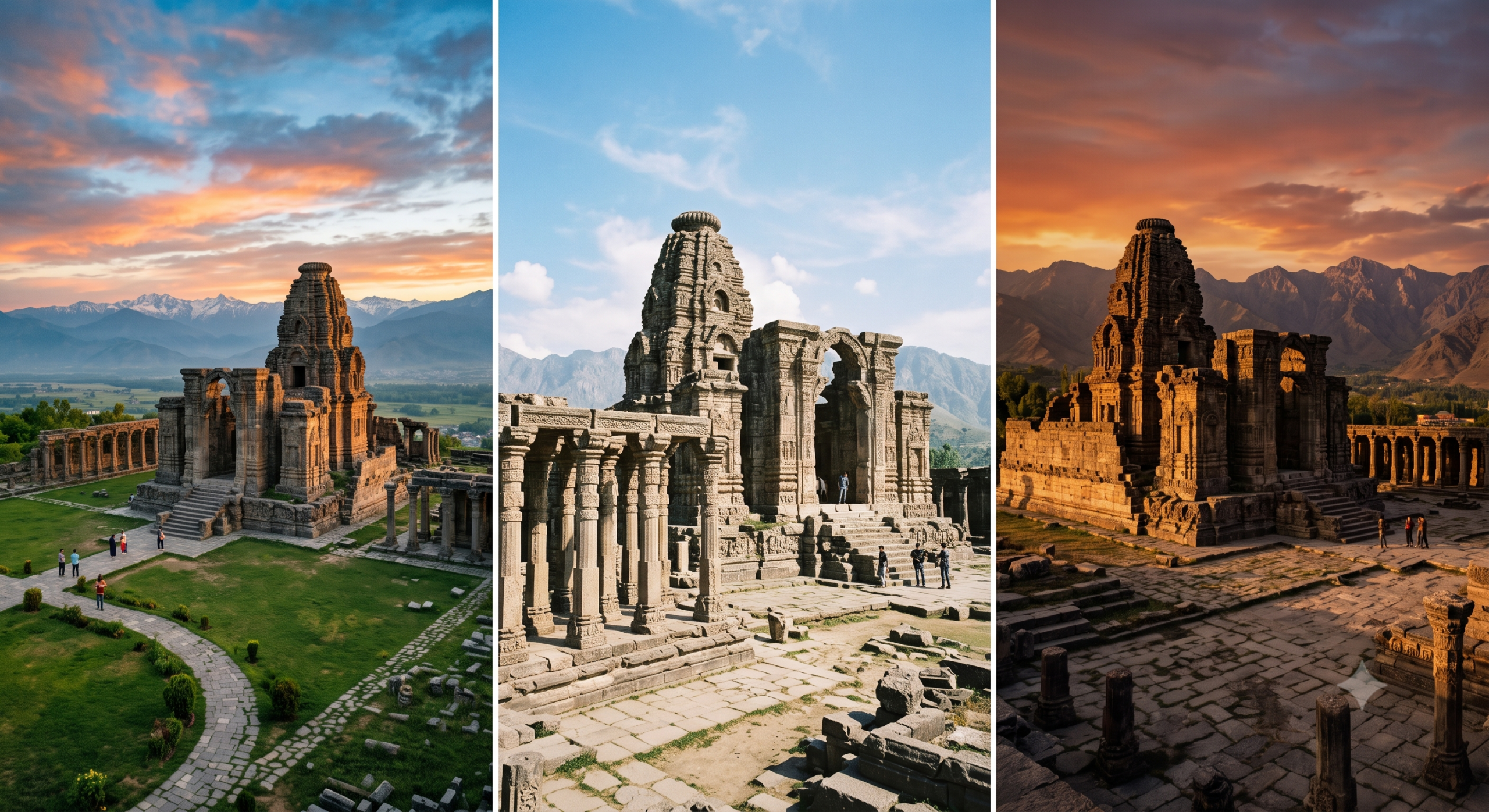
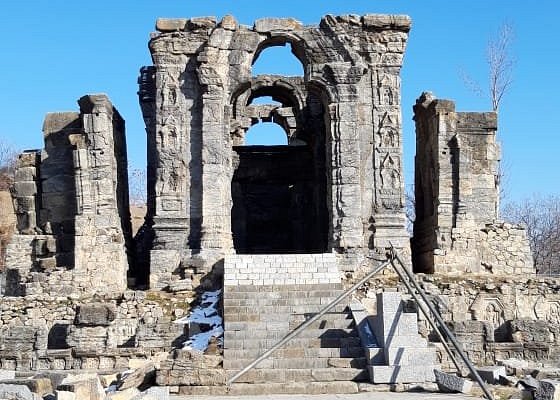
The moment the golden rays of the autumn sun hit the weathered limestone of the Martand Sun Temple, I knew my detour from the standard tourist path was the best decision I’d ever made. Standing amidst the silent, colossal ruins in the Anantnag district, I felt a strange, humbling pulse of history beneath my boots. This wasn’t just another archaeological site; it was a defiant skeleton of a glorious past, a testament to the 8th-century architectural genius that once dominated the Kashmir Valley. If you are planning a trip to the valley, this site is a non-negotiable stop for anyone who wants to feel the true soul of ancient India.
The Unplanned Journey: My Visit to Martand
I visited the Martand Sun Temple during the second week of October, a time when the air in Kashmir turns crisp and the Chinar leaves begin their fiery transformation. My original plan was a straightforward drive from Srinagar to Pahalgam, but a local tea-seller in Anantnag mentioned the ‘Bawan’ temple ruins with such reverence that I told my driver, Mushtaq, to change course. We faced a slight delay near the Mattan market due to a local procession, which initially frustrated me, but it allowed me to soak in the local atmosphere—the smell of freshly baked lavasa and the rhythmic chatter of the Kashmiri language.
When we finally reached the plateau where the temple sits, the delay was forgotten. The site was surprisingly quiet, far from the chaotic crowds of Dal Lake. I spent nearly four hours just walking between the 84 fluted columns, feeling the rough texture of the stone. There is a specific kind of silence here—one that isn’t empty, but filled with the echoes of a thousand years of prayer and the eventual, tragic crumbling of empires.
The Architecture and History of a Lost Empire
The Martand Sun Temple was built by King Lalitaditya Muktapida of the Karkota dynasty. He was a ruler whose ambitions spanned from the Caspian Sea to the banks of the Kaveri. This temple was his crowning achievement, dedicated to Surya, the Sun God. As I walked through the Antarala (antechamber), I noticed the distinct blend of Gandharan, Greek, and Roman architectural styles, which is unique to Kashmiri temple building.
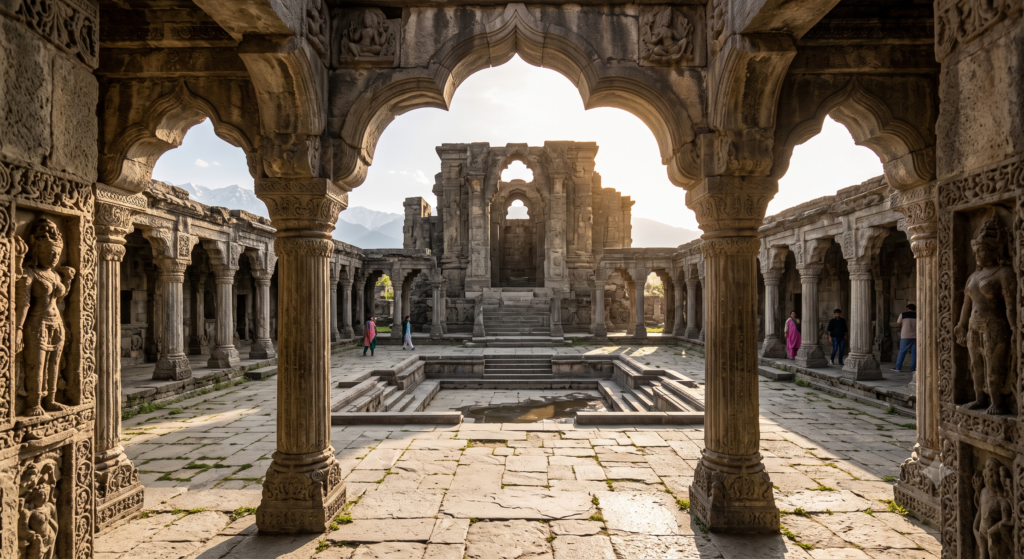
The layout is massive, featuring a central shrine surrounded by a vast courtyard and a colonnade of 84 smaller shrines. The number 84 is significant in Hindu mythology, representing the number of years in a solar cycle or the number of incarnations. Even in its ruined state, the sheer scale of the blocks—some weighing several tons—makes you wonder how they were transported to this plateau without modern machinery. For more historical context, the Archaeological Survey of India provides extensive documentation on the preservation efforts at this site.
If you’re interested in more ancient wonders, you might want to check out our comprehensive guide to ancient Indian temples or explore our ultimate 7-day Kashmir itinerary for more hidden gems. Understanding the history here requires looking past the damage; you have to see the elegance in the remaining carvings of Ganga, Yamuna, and Surya himself.
The Natural Beauty Surrounding the Ruins
What sets the Martand Sun Temple apart from other ruins I’ve visited, like Hampi or Konark, is its dramatic backdrop. The temple is perched on a high plateau (karewa) that offers a 360-degree view of the Kashmir Valley. To the north, the snow-capped peaks of the Pir Panjal range stand like eternal sentinels. To the south, the valley floor stretches out in a mosaic of saffron fields and apple orchards.
During my visit, the sky was a piercing shade of cerulean, contrasting sharply with the grey-brown limestone of the ruins. I sat on a fallen pillar and watched the shadows of clouds dance across the courtyard. It’s a photographer’s paradise, but more than that, it’s a place for meditation. The wind here carries the scent of pine from the nearby hills, and the only sound is the occasional call of a distant shepherd. You can find more about the natural landscapes of this region in our post on must-visit spots in Anantnag.
How to Reach and Cost of Travel
Reaching the Martand Sun Temple is relatively easy if you are already in South Kashmir. Most travelers use Srinagar as their base. From Srinagar, the temple is about 64 kilometers away. I hired a private taxi for the day, which cost me approximately 3,500 INR. This included the trip to Martand and a subsequent drop-off at my hotel in Pahalgam. If you are on a budget, you can take a shared cab from Srinagar to Anantnag (about 150 INR) and then a local auto-rickshaw or ‘Sumo’ to the Mattan area for another 50-100 INR.
The drive from Srinagar takes about 2 to 2.5 hours, depending on the traffic in the Pampore saffron fields. For those coming from nearby hubs like Jammu, it is a much longer journey—about 6 to 8 hours through the Chenani-Nashri tunnel. I highly recommend combining this visit with a trip to the nearby Mattan Temple, which is a living site of worship just a few kilometers away. You can read more about logistics in our Kashmir budget travel guide.
Best Time to Visit: Then vs. Now
I visited in October, which I believe is the ‘Golden Hour’ of Kashmir. The weather was perfect—cool enough for a light jacket but sunny enough to keep the ruins warm. However, if you visit in the Spring (April to June), the surrounding plateau is covered in wildflowers, making the ruins look like they are floating in a sea of color. Winter visits (December to February) are for the brave; the temple looks hauntingly beautiful under a blanket of snow, but the roads can be treacherous and the plateau extremely windy.
Comparing my October experience to a friend’s July visit, I realized I had the advantage of fewer crowds. In the peak summer months, the site sees more domestic tourists, and the heat can be surprisingly intense on the open plateau. My advice? Aim for the shoulder seasons—late September to October or March to April—to experience the temple in its most poetic state.
Tips and Tricks for the Modern Traveler
First, carry water and snacks. There are no shops at the actual temple site, and the climb from the parking area, though short, can be tiring in the sun. Second, hire a local guide if you find one near the entrance; their stories about the ‘Pandav Lari’ (as locals call the ruins) add a layer of folklore that you won’t find in history books. Third, arrive early in the morning or late in the afternoon. The ‘Golden Hour’ lighting here is spectacular for photography, as the sun aligns perfectly with the main sanctum.
Lastly, respect the site. While it is a ruin, it is a protected monument and carries immense spiritual significance for many. Avoid climbing on the fragile carvings. If you have extra time, take a walk behind the main structure toward the edge of the plateau for a view of the Lidder River snaking through the valley below.
Frequently Asked Questions about Martand Sun Temple
Who destroyed the Martand Sun Temple?
The temple was largely destroyed in the early 15th century under the orders of Sultan Sikandar Shah Miri, also known as Sikandar Butshikan. It took nearly a year of active effort to dismantle the massive stone structures, and an earthquake later contributed to its current ruined state.
Is Martand Sun Temple the same as the one in the movie Haider?
Yes, the Martand Sun Temple gained modern fame as the filming location for the ‘Bismil’ song in the Bollywood movie *Haider*. While the movie showcased its dramatic beauty, seeing it in person is a far more profound experience than any cinematic portrayal.
Do I need a permit to visit the temple?
No, you do not need any special permits to visit the Martand Sun Temple. It is an open site under the Archaeological Survey of India. There is currently no entry fee for Indian or foreign tourists, though this is subject to change based on new ASI regulations.
How far is Martand Sun Temple from Pahalgam?
The temple is approximately 30 kilometers from Pahalgam. It takes about 45 minutes to an hour to reach by car, making it an excellent stopover if you are traveling between Srinagar and Pahalgam.
Walking away from the Martand Sun Temple as the sun began to dip behind the mountains, I felt a profound sense of gratitude. These stones have survived centuries of weather, war, and neglect, yet they still stand with an undeniable dignity. They remind us that while empires fall and religions evolve, the human drive to create something eternal and beautiful remains unchanged. If you find yourself in the valley of Kashmir, do not just pass by the signs for Anantnag; turn off the main road, climb the plateau, and let the sun-drenched ruins of Martand tell you their story.
Frequently Asked Questions
Why is the number 84 significant in the temple’s architectural layout?
The temple features a colonnade of 84 smaller shrines surrounding the central courtyard. In Hindu mythology, this number is deeply symbolic, representing the number of years in a solar cycle or the various incarnations in the cycle of life. This specific architectural choice reinforces the temple's dedication to Surya, the Sun God, effectively aligning the physical structure with ancient Indian cosmic and temporal beliefs.
How does Martand’s architectural style differ from other sun temples like Konark?
Unlike the traditional Nagara style seen in Konark, Martand displays a unique synthesis of Gandharan, Greek, and Roman influences. The use of fluted columns and triangular pediments reflects Kashmir’s historical role as a cultural crossroads. This blend of Mediterranean aesthetics with Indian spiritual design created a distinct Kashmiri architectural identity that flourished during the 8th-century Karkota dynasty, making it a rare site for history enthusiasts.
What makes the location of Martand Sun Temple unique for photographers?
The temple is perched on a high plateau known as a karewa, offering unobstructed 360-degree views. To the north, you can capture the snow-capped Pir Panjal range, while the south reveals a mosaic of saffron fields and apple orchards. The grey-brown limestone ruins contrast sharply against the cerulean sky, especially during the golden hour, providing a dramatic backdrop that is far more expansive than typical valley-floor sites.
Is the Martand Sun Temple easily accessible for those on a standard Kashmir itinerary?
Yes, it is a convenient detour for travelers driving from Srinagar to Pahalgam. Located in the Anantnag district near Mattan, it requires only a slight deviation from the main highway. While the site is quieter than Dal Lake, visitors should account for potential local traffic in the Mattan market area. Hiring a local driver is recommended to navigate the plateau ascent and ensure you find the correct 'Bawan' ruins.
What is the best time of year to experience the temple’s atmosphere?
While the temple is accessible year-round, the second week of October is particularly magical. During this period, the air is crisp and the surrounding Chinar trees begin their fiery transformation into shades of gold and red. This season offers the best visibility of the distant mountain peaks and provides a comfortable climate for spending several hours exploring the extensive ruins and the 84 fluted columns without the summer heat.