
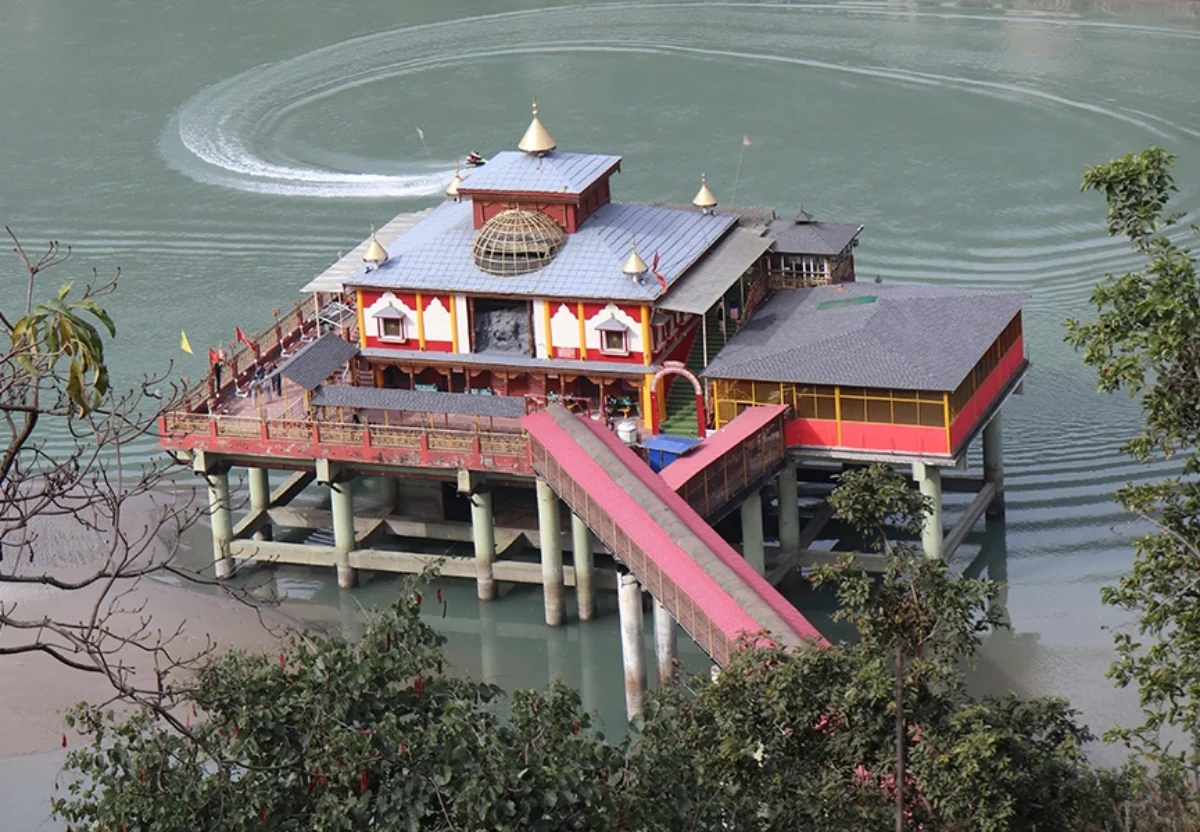
Imagine standing on a suspended walkway as the emerald waters of the Alaknanda River roar beneath your feet, while the scent of incense and the rhythmic tolling of brass bells fill the crisp Himalayan air. My recent journey to the Dhari Devi Temple was not just a travel check-off; it was a sensory immersion into the spiritual heart of Uttarakhand. Nestled between Srinagar and Rudraprayag, this sacred site is widely considered the protective soul of the Garhwal region, guarding the portals to the Char Dham shrines.
As I approached the temple, the sun began to dip behind the jagged peaks, casting a golden hue over the water. The temple itself appears to float on the river, a modern architectural marvel built atop a concrete platform to preserve the ancient idol after the 2013 floods. It is here that faith meets the elements in a breathtaking display of devotion and nature’s raw power.
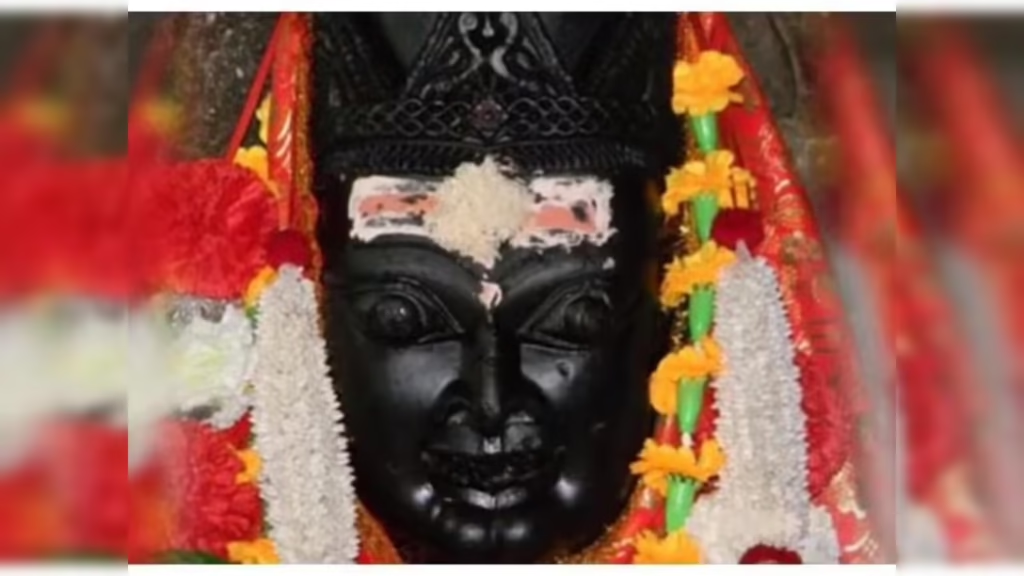
Walking across the bridge toward the sanctum, I felt a palpable shift in energy. The local legends say that the deity here, an incarnation of Goddess Kali, changes her appearance throughout the day—transforming from a young girl in the morning to a woman at noon and an elderly lady by evening. Witnessing the evening aarti, I could almost see the shifting shadows on the stone idol, a sight that leaves even the most cynical traveler in a state of quiet awe.
The Dhari Devi Temple is more than just a religious landmark; it is a symbol of resilience, of a strong protector of the Kedarnath Dham. When the original temple was submerged during a hydroelectric project, the idol was temporarily moved, an act many locals believe triggered the devastating Kedarnath floods. Today, the goddess sits elevated, overlooking the very waters that define this landscape, serving as a silent sentinel for every pilgrim heading toward the high mountains.
Locals believe that no journey to the mountain is complete without seeking Dhari Devi’s blessings. So how could I, having come specifically to explore Garhwal region of Uttarakhand not visit the temple to seek her blessings!
The Legend and Spiritual Significance of Dhari Devi
The history of this Shakti Peeth is steeped in folklore that dates back centuries. According to local lore, the upper half of the idol of Goddess Kali drifted down the river and got stuck near the village of Dhari. The villagers heard a divine voice commanding them to install the idol right there, leading to the birth of the Dhari Devi Temple.
Spiritually, the temple is regarded as the guardian of the Char Dham—Yamunotri, Gangotri, Kedarnath, and Badrinath. It is a common belief among the hill folk that no pilgrimage to the higher Himalayas is complete without seeking the blessings of Dhari Devi. She is the one who grants permission to enter the sacred valleys beyond.
The temple’s architecture has evolved significantly. While the original structure was a simple stone shrine on the riverbank, the new elevated platform allows the river to flow freely underneath. This blend of ancient divinity and modern engineering ensures that the goddess remains in her original location, even as the landscape around her undergoes transformation.
A Visual Masterpiece: The Location and Natural Beauty
Located in the Pauri Garhwal district, the setting of the Dhari Devi Temple is nothing short of cinematic. The Alaknanda River here is wide and deep, reflecting the surrounding pine-covered hills like a giant mirror. The drive from Srinagar to the temple follows the winding river, offering glimpses of terraced farms and small hamlets clinging to the mountainsides.
When you reach the temple site, you are greeted by a vibrant marketplace selling red chunris, marigold garlands, and copper bells. The gate is right on the road but the road winds down to the center of the Alaknanda river, where the temple is housed. The walk from the road down to the riverbank is lined with lost of stalls, including some juice shops that sell sugarcane juice.
However, the real magic begins on the pedestrian bridge. The wind whistles through the railings, carrying the chants of devotees and the distant roar of the rapids. There is a place where you can leave your shoes and then enter the pedestrian bridge. The peace of the surroundings, the chilly breeze that kisses the blue waters, will leave you mersmerized.
The turquoise water is so clear in some seasons that you can see the riverbed, while in the monsoons, it turns into a powerful, muddy torrent that commands absolute respect. No matter when you visit, the contrast between the colorful temple flags and the deep greens and blues of the valley is a photographer’s dream. It is a place where you don’t just see the beauty; you feel it vibrating in the air.
How to Reach Dhari Devi Temple: Routes and Logistics
Reaching the Dhari Devi Temple is relatively straightforward, as it lies right on the Badrinath National Highway (NH-58). Most travelers use Rishikesh or Dehradun as their base before heading deeper into the Garhwal hills. The road conditions are generally good, though they can be tricky during the rainy season due to landslides.
If you are coming from Rishikesh, the journey is approximately 115 kilometers. You can expect a drive of about 3.5 to 4 hours, depending on traffic and road work. For those starting from Dehradun, the distance is roughly 155 kilometers, taking about 5 to 6 hours. The route takes you through the bustling town of Devprayag, where the Alaknanda and Bhagirathi rivers meet to form the holy Ganges.
Public transport is readily available. State-run buses (UTC) and private buses heading toward Rudraprayag, Joshimath, or Badrinath all pass by the temple. You can simply ask the conductor to drop you at the Dhari Devi stop. Shared taxis (Maxx) are also a popular and affordable way to traverse these winding mountain roads.
Travel Costs from Rishikesh and Dehradun
Budgeting for your trip to the Dhari Devi Temple depends largely on your mode of transport. For solo travelers or those on a budget, public transport is exceptionally affordable. A state bus from Rishikesh to the temple stop will cost you between ₹250 and ₹350. From Dehradun, the bus fare is approximately ₹400 to ₹550.
If you prefer the comfort of a private taxi, prices will be higher. A round-trip private cab from Rishikesh can cost anywhere from ₹4,500 to ₹6,000, depending on the vehicle type and your negotiation skills. From Dehradun, expect to pay between ₹6,500 and ₹8,500 for a full-day trip or an overnight stay nearby.
Shared taxis are a middle-ground option, charging roughly ₹400 to ₹600 per seat from Rishikesh. Once you arrive at the temple, there is no entry fee, but you might want to keep ₹100–₹500 aside for offerings, prasad, and small donations. Food at local dhabas along the way is quite cheap, with a hearty meal costing around ₹150 to ₹250.
Pro-Tips and Tricks for the Savvy Traveler
To make the most of your visit to the Dhari Devi Temple, timing is everything. I highly recommend arriving early in the morning, around 6:30 AM, to witness the first aarti. The morning mist over the Alaknanda creates a mystical atmosphere that is far more peaceful than the crowded midday hours when the sun is harsh.
Photography is generally allowed in the temple complex, but be respectful and avoid taking photos inside the main sanctum where the idol is kept, where photography is prohibited. The guards and priests are strict about this rule. If you want the best panoramic shots of the floating temple, walk a few hundred meters further down the highway toward Rudraprayag for an elevated vantage point.
Wear comfortable walking shoes, as the path from the parking area to the temple involves a fair bit of walking including lots of stairs. There are several benches that line the winding walk for you to sit down and rest, if tired.
Also, carry a light jacket even in summer, as the breeze from the river can be quite chilly. If you are visiting during the Navratri festival, be prepared for massive crowds and long wait times, as this is when the temple sees its peak footfall.
The Rituals and Local Flavors
Participating in the rituals at Dhari Devi Temple is a deeply personal experience. You will see devotees tying bells to the temple railings—a tradition believed to ensure that the goddess hears your prayers. The sound of hundreds of bells ringing simultaneously in the wind creates a hypnotic drone that stays with you long after you leave.
After your darshan, take a moment to sit by the riverbank. The local stalls nearby serve some of the best Pahadi chai and hot pakoras. Try the local ‘Mandua ki Roti’ if you find a small eatery nearby; it’s a nutritious finger millet flatbread that is a staple of the Uttarakhand diet. Engaging with the local shopkeepers can also yield fascinating stories about the temple’s history that you won’t find in guidebooks.
The temple is also a great spot to observe the local culture of Garhwal. You’ll see women in traditional attire with large gold nose rings (Naths) and men in Nehru jackets, all coming together in a shared space of faith. This cultural tapestry adds a layer of richness to the visit, making it more than just a sightseeing stop.
As you prepare to leave this sacred enclave, take one last look at the Alaknanda flowing relentlessly toward the plains. The Dhari Devi Temple stands as a bridge between the physical and the spiritual, a place where the roar of the river reminds us of nature’s dominance and the silent idol reminds us of the power of belief. Whether you seek divine intervention or simply a moment of peace amidst the mountains, this temple offers a sanctuary that resonates with the soul. Carry the echo of the temple bells in your heart as you continue your journey through the Land of the Gods.
Read my other Posts – Rudraprayag and Devprayag.